


Since 8 September 2026 Google has been displaying search results differently in Europe. The change was made to comply with the Digital Markets Act, the European Union law for digital markets, two months after the European Commission fined the company 460 million euros. It applies to anyone searching from a European Union country, so it applies to Google Search in Greece too. Below we explain what changed, why, which sectors it touches most, what it does not mean and what a Greek business can practically do.
The short conclusion, for anyone in a hurry: the changes at Google do not call for panic. They call for understanding and the right adjustments.
What changed in Google results in Europe
According to the Reuters report of 8 September 2026, Google changed the layout of the results page for searches about hotels, flights, restaurants and products:
- At the top there is now a block of comparison and booking sites such as Booking.com, Expedia or trivago. Google calls them “vertical search services”. One is shown with more detail and two more in brief.
- Further down there is a carousel with the businesses themselves, meaning the hotels, airlines and restaurants, with a link to their website, phone number and address. Real-time prices and date filters were removed from this block.
- The separate vacation rentals block was removed from European results, as the travel publication Skift reports.
- The order inside each block is still decided by Google’s algorithm.
The changes apply only to users inside the European Union and the European Economic Area. Google has documented them in its developer documentation and says that, where relevant, they will also apply to AI Overviews and AI Mode.
This is not the first change of its kind. In March 2024 Google had already made more than 20 changes to European results, among them removing the Google Flights unit and the Maps tab from the results page. The September 2026 change is the largest so far. Google itself described it to Reuters as the biggest reduction in quality in the 29-year history of its search engine.
Why Google is changing
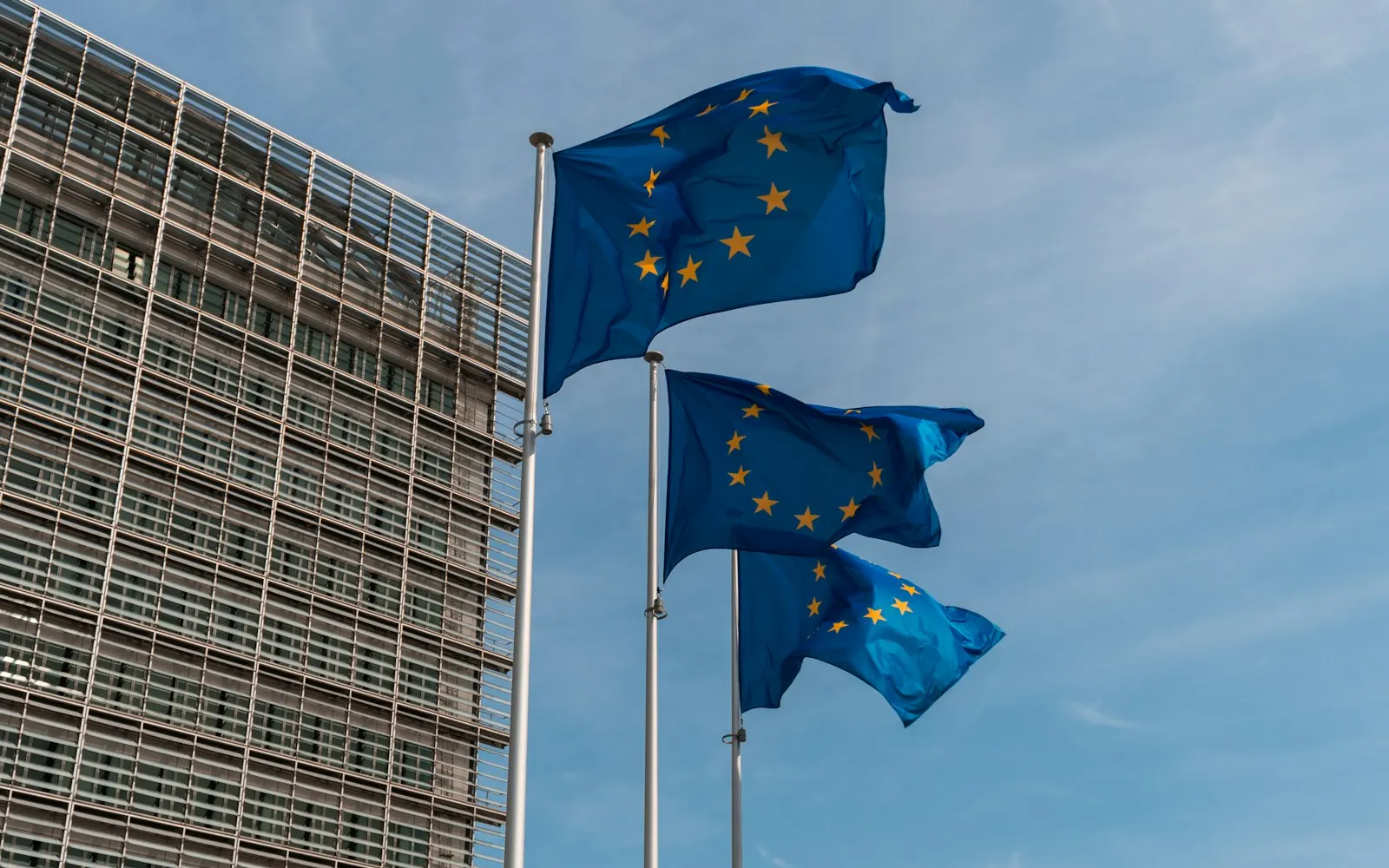
The Digital Markets Act is the European Union law that has been fully applicable since March 2024 and sets rules for very large digital platforms, the so-called gatekeepers. One of those rules, Article 6(5), says that a gatekeeper may not rank its own services more favourably than similar services of third parties.
The European Commission found, first preliminarily in March 2025 and then definitively, that Google gave its own services for shopping, hotels, transport and sports results a better position, richer presentation and filters that competitors did not have. On 23 July 2026 it imposed a fine of 460 million euros for Google Search, together with 430 million for Google Play, and gave a 60-day deadline to comply, with the threat of periodic penalties of up to 5% of worldwide turnover. The 8 September change is Google’s answer to that deadline.
Google disagrees with the decision. In a statement in July it speaks of “product degradation” and says it is forced to strip away features such as real-time prices and availability. It is worth keeping the two levels apart: the law and the Commission’s decisions are facts. Whether results become better or worse for the user is each side’s position.
Which sectors it may affect most
The change concerns specific types of search, not all of them. In Greece, the sectors that see it most directly are:
- Tourism and hospitality. Hotels, rooms to let, villas, vacation rentals. Here the change is the most visible: booking platforms move up, the business itself moves down and loses its prices.
- Food and drink. Restaurants and cafes, especially in tourist areas, where the search often goes through booking and review platforms.
- Transport. Airlines, ferries, car rentals.
- Retail and e-shops. Product searches, where price comparison services are strengthened.
For most other sectors, such as services, freelancers, B2B and local shops without online bookings, Google results did not change with this move.
The “up to 30%”: what Google says and what we actually know
You will read it in many reports: that direct bookings through Google fell by up to 30%. This is Google’s own figure and position, not an independent measurement. It first appeared in a Google post in April 2024 as a concern voiced by hoteliers, in November 2024 as reports from hotels, airlines and small retailers, and since 2025 Google presents it as fact. To Reuters, on 8 September 2026, it repeated that the earlier changes led to a 30% drop in free direct traffic to European businesses.
There is no independent data for Greece. A measurement by Mirai, a company specialising in direct hotel bookings, showed in November 2024 a smaller drop, 17%, in the share of Google Hotels in the direct bookings of EU hotels. The European hotel associations themselves are split: HOTREC welcomed the Commission decision and at the same time asked that compliance should not undermine the direct visibility of hospitality businesses.
The only number that matters for you is your own. You will find it in Google Search Console and Analytics, not in press releases.
What the changes do not mean
- They do not mean your website disappears from Google. The regular organic results with links are still there as before. The change concerns the special blocks for hotels, flights, restaurants and products.
- They do not mean SEO lost its value. The opposite is true. The fewer extras Google shows about your business inside its own blocks, the more the position of your own page matters. SEO in Greece, as everywhere, is changing shape, not stopping.
- They do not mean the Google Business Profile is redundant. The link, phone number and address shown in the business carousel come from there.
- They do not concern Google Ads. Paid ads did not change with the Digital Markets Act.
- They are not final. The Commission and Google continue their dispute and the layout may change again. This article describes the situation as of September 2026.
What a Greek business can practically do
- Measure before you decide. Open Search Console and compare September impressions and clicks with the previous month and with last September. If you see no change, you have no problem to solve.
- Treat the Google Business Profile as a second website. Correct details, hours, photos, a link to the booking page or e-shop, replies to reviews. We have written in detail about the Google Business Profile and the local business.
- Give the customer a reason to prefer your site over the platform. Visible prices, a better direct-booking rate where you can, an easy process and fast loading on mobile.
- Correct structured data. Your site must state clearly, in the technical form Google reads, what the business is, where it is, what it offers and at what price. That is how you are recognised as the actual provider and not as one more link.
- An organic presence that answers questions. The same changes carry over to AI Overviews, so content that clearly explains what you do counts twice. See how your business appears in AI answers.
- Advertising in moderation. Where the organic position is not enough, Google Ads was not affected. Before you start, see what a click costs per sector in Greece.
- Do not depend on Google alone. An email and SMS list of existing customers, repeat bookings, social networks. Every algorithm change hurts less when you have customers who know you by name.
One ecosystem, not separate tools
If the September change makes one thing visible, it is that the pieces of your presence on Google no longer work separately. The business carousel takes its details from the Google Business Profile. The profile sends the customer to the website. The website has to convince and serve them, with correct data and speed. Measurement tells you which of these is working. And advertising covers the gaps the organic position leaves. Website, Google Business Profile, organic presence, structured data, tracking and paid advertising now work more and more as a single ecosystem. Whoever sees them that way adjusts calmly to every Google change. Whoever sees them as separate accounts starts over with every announcement.
Want us to look at how your business appears on Google today? Talk to us.