


The most common question we hear about advertising on Google is “how much does it cost”. The honest answer is that there is no price list. There are, however, two separate amounts you need to understand, because the confusion almost always starts with mixing them up: the budget you pay Google for the clicks, and the fee for managing the campaigns. Let us take them one at a time, with Greek numbers.
Cost per click in Greece
On Google Ads you only pay when someone clicks on your ad. How much, comes out of an auction that runs on every search, so it changes by keyword, by region and by season. Based on the accounts we manage and public benchmarks for the Greek market, the orders of magnitude in 2026 are roughly as follows.
In e-commerce with everyday consumer products, a click usually runs from 0.30 to 1.50 euros. In local services, such as plumbers, electricians, hair salons or car repair shops, from 0.50 to 2.50 euros. In sectors with an expensive customer, such as lawyers, insurance, medical services, air conditioning in summer or car rentals, a click easily passes 2 euros and on some keywords reaches 5 and above. In B2B and software, from 1.50 to 4 euros.
These are reference points, not a promise. You learn your own real cost per click within the first week of an active campaign, and from there on you work to bring it down.
What pushes the click up, and what brings it down
Competition is the first factor: “lawyer Athens” has dozens of advertisers, “grill house Xanthi” has almost none. Geography is the second, because the same keyword in Athens often costs double what it costs in a provincial town. The third, and the only one you fully control, is quality: the more relevant your ad and landing page are to what the user searched for, the less you pay for the same position. This is where most campaigns are won or lost.
Negative keywords are the most underrated tool. Without them, an electrician pays for clicks on “electrician salary” and “electrician school”. Season matters too: November with Black Friday, and December, are the most expensive months for almost everyone.
How much budget you need to see results
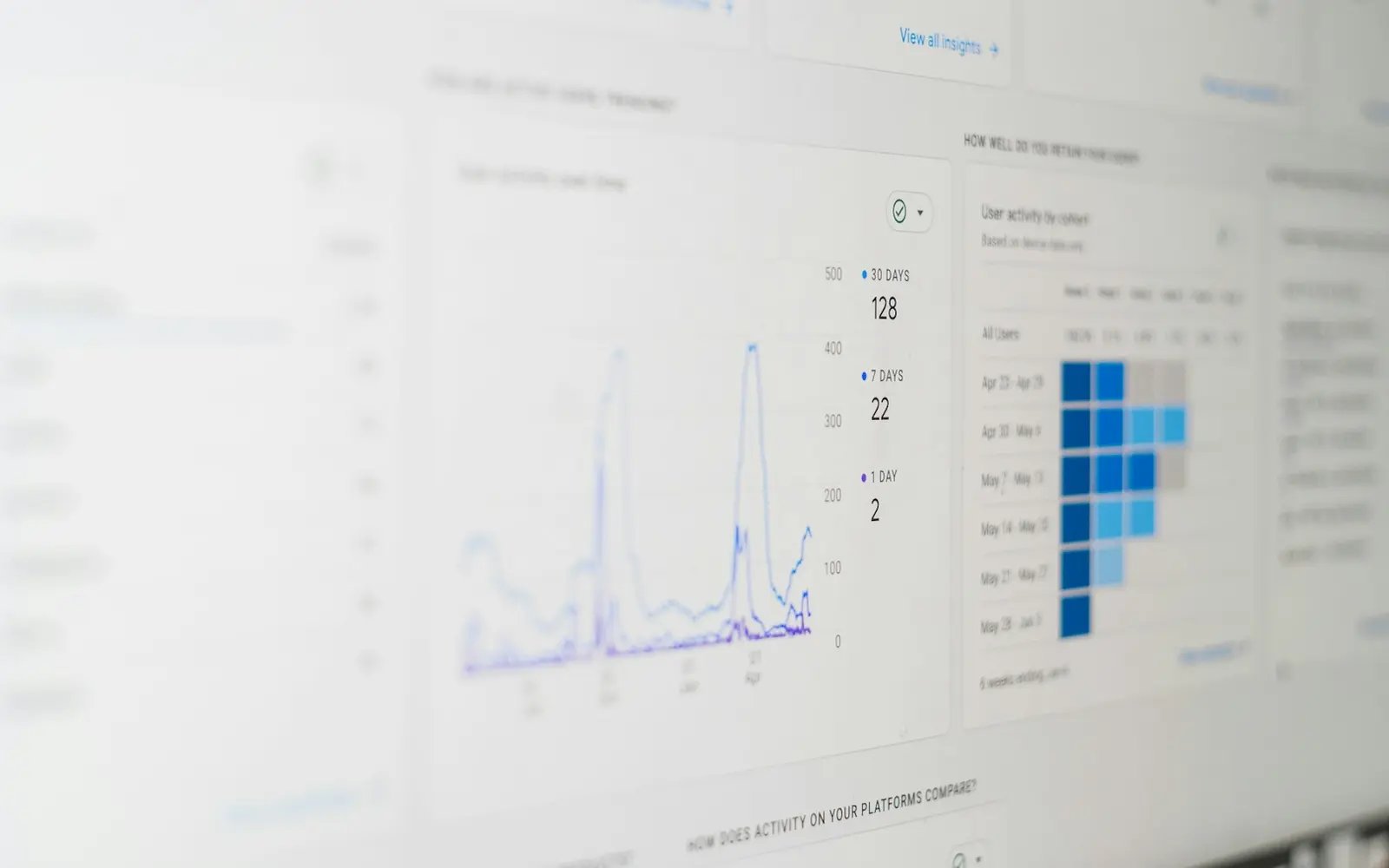
Do a simple calculation. If your click costs 1 euro and 3 out of every 100 visitors call you or fill in the form, then each lead costs you about 33 euros. With 10 euros a day, that is 300 a month, you get about 300 clicks and 9 leads. If you close 3 of those 9, you know exactly what every euro brings you.
As an order of magnitude, 300 to 500 euros a month is a sensible starting point for a local business on one platform, enough for the campaign to gather data and improve. 600 to 1,000 euros lets you test more than one keyword group and cover more areas. Above 1,000 euros makes sense for e-shops and sectors with expensive clicks. Below 150 to 200 euros a month, a campaign rarely collects enough data to learn, and the conclusion “Google Ads does not work” gets drawn unfairly.
The management fee: percentage or flat
The second amount is what you pay whoever manages the campaigns. The traditional model is a percentage of the budget, usually 10 to 20%. It has a structural problem: the more you spend, the more the manager earns, regardless of whether the clicks brought customers.
The other model is a flat monthly fee. At intermedia, Google Ads management starts from 180 euros a month per platform, regardless of budget, and the budget itself you pay directly to Google from your own card. That way you always know where every euro goes, and our incentive is for the clicks to bring customers, not for the bill to grow.
The real cost is the cost per customer
The click is the easy number, but it is not the one that matters. A 4 euro click in a sector where the customer spends 2,000 euros is cheap. A 0.30 click that leads nowhere is money thrown away. That is why before every campaign we set up measurement: GA4, conversion tracking, call tracking. What is not measured does not improve, and what does not improve simply gets more expensive.
When Google Ads is not worth it
There are cases where we say it plainly. If nobody is searching for what you sell with words on Google, Google Ads has nobody to show up to and Meta is a better starting point. If your site is slow or has no clear way to get in touch, the clicks will be lost before they become customers. And if there is no measurement, you will pay without ever learning what you got.
Want an estimate for your own sector and region, with real numbers rather than generalities? Contact us.